What's in it?
Search Entire CPID Database
Enter Products, Manufacturers, Chemicals, Product Categories and Product Types
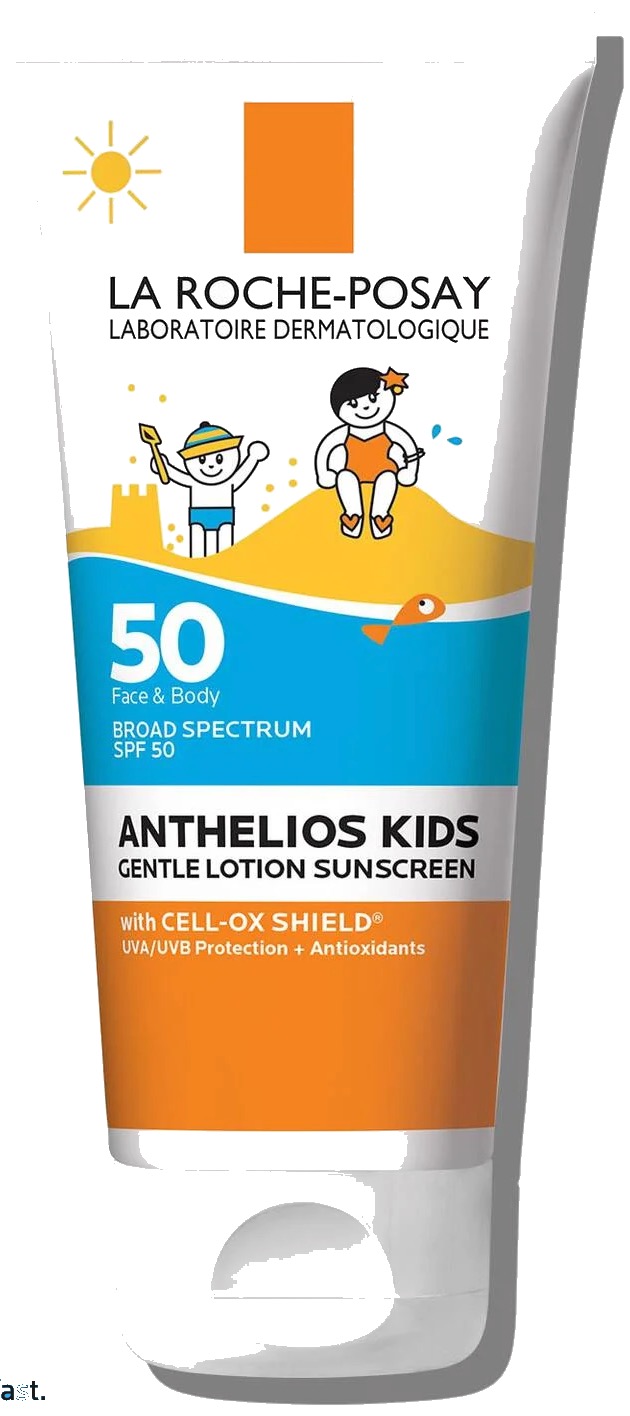 |
La Roche-Posay Anthelios Kids, Gentle Lotion Sunscreen With Cell-Ox Shield-01/19/2022
Products in this Consumer Product Information Database (CPID) are classified based on their composition:
Substances: single chemicals
Preparations: products which contain chemicals that can be easily separated during normal use
Articles: products or product assemblies that do not contain chemicals that can be separated out from the product or assembly under normal or advertised use.
Classification: Preparation
Indicates country where product is sold.
Market: US/CanadaPurpose of product.
Usage: Sunscreen for ChildrenStructure such as solid, liquid, aerosol etc.
Form: liquidDate when validity of Material Safety Data Sheet (MSDS) or Safety Data Sheet (SDS) was last verified.
Date verified: April 22, 202610 Hudson Yards
New York NY 10001
-
Chemical Composition/Ingredients
The GHS is an acronym for The Globally Harmonized System of Classification and Labelling of Chemicals. The GHS is a system for standardizing and harmonizing the classification and labelling of chemicals. Chemicals are associated with codes that define their health, physical and environmental hazards.This universal hazard communication system was developed to ensure that employers, employees and consumers are provided with adequate, practical, reliable and comprehensible information on the hazards of chemicals, so that they can take effective preventive and protective measure for their own health and safety.
Advanced
The GHS classifications for chemicals associated with products in this database may be viewed by selecting the "Advanced" button on the Chemical Ingredients tables. Since this is a work in progress, GHS classifications may not be shown for all chemical ingredients.-
Primary Chemical Name is the standard name assigned to a chemical substance.
ChemicalChemical Abstracts Service Registry Number is a unique identifier for a chemical and its synonyms. CAS numbers identify the chemical, but not its concentration or specific mixture. CAS Registry Numbers are assigned by the Chemical Abstracts Service, a division of the American Chemical Society. For more information: www.cas.org
CAS No./ID
We have assigned "ID numbers" (with 6 leading zeros or nines, e.g., 000000-xx-x , 888888-xx-x) or 999999-xx-x) for blends and chemicals that do not have CAS numbers.Percent of chemical in preparation.
% Conc.Purpose served by this chemical
FunctionChemical of Concern (CoC)
Chemical of Concern(CoC)Avobenzone 070356-09-1 3.0 Active Ingredient No Homosalate 000118-56-9 13.0 Active Ingredient No Octisalate 000118-60-5 5.0 Active Ingredient No Octocrylene 006197-30-4 10.0 Active Ingredient No Water 007732-18-5 -- -- No Dimethicone 009006-65-9 -- -- No Glycerin 000056-81-5 3.6 -- No Styrene/acrylates copolymer 999999-58-2 -- -- No Poly C10-30 Alkyl Acrylate 888888-11-1 -- -- No Polymethylsilsesquioxane 068554-70-1 -- -- No Acrylates/Dimethicone Copolymer 999999-89-8 -- -- No Niacinamide (Vitamin B) 000098-92-0 1.0 -- No Silica, amorphous (Diatomaceous silica) 007631-86-9 1.0 -- No Caprylyl Methicone 017955-88-3 -- -- No Acrylates/C10-30 Alkyl Acrylate Crosspolymer 176429-87-1 -- -- No Caprylic/Capric Glycerides 073398-61-5 -- -- No Caprylyl glycol 001117-86-8 -- -- No Chlorphenesin 000104-29-0 -- -- No Diethylhexyl Syringylidenemalonate 444811-29-4 -- -- No Glyceryl stearate 000123-94-4 -- -- No Inulin Lauryl Carbamate 478483-27-1 -- -- No p-Anisic acid 000100-09-4 -- -- No Panthenol 000081-13-0 -- -- No PEG-100 Stearate 009044-99-3 -- -- No PEG-4 Laurate 009004-81-3 -- -- No 2-Phenoxyethanol 000122-99-6 -- -- No Potassium cetyl phosphate 019035-79-1 -- -- No Sodium dodecylbenzenesulfonate 025155-30-0 -- -- No Sodium hyaluronate 009067-32-7 -- -- No Tocopherol 000059-02-9 -- -- No Triethanolamine 000102-71-6 -- -- Yes  CoC List
Trisodium Ethylenediamine Disuccinate 178949-82-1 -- -- No Xanthan gum 011138-66-2 -- -- No -
Health Effects Information
Ingredients and Health Effects Information are taken from the manufacturer's product label and/or the Safety Data Sheet (SDS). Products are not tested and manufacturer's information presented here is not evaluated by DeLima Associates.
View Safety Data Sheet(SDS) Date that the Safety Data Sheet (SDS) was issued by manufacturer of a specific product.
SDS DATE :January 19, 2022 Health Flammability Reactivity HMIS is the Hazardous Materials Identification System developed by the American Coatings Association and indicates the levels (“1” to “4”) of Health Hazard, Flammability Hazard and Physical Hazard associated with a specific product.
HMIS RATING0 1 0 Measure of Alkalinity/Acidity of substance or preparation where a level of 7 is considered as neutral.
pH Levels5.2-5.8 -
Warnings
Hazard StatementsThe mixture does not meet the criteria for classification.Precautionary statementsGeneralNone.PreventionObserve good industrial hygiene practices. Response Wash hands after handling.ResponseNone.StorageStore away from incompatible materials.DisposalDispose of waste and residues in accordance with local authority requirements. -
Acute health effects
From SDS:
Hazards Identification
Emergency Overview
None.
Potential Health Effects
Eye Contact: No adverse effects due to eye contact are expected.
Skin Contact: No adverse effects due to skin contact are expected.
Inhalation: Prolonged inhalation may be harmful.
Ingestion: Expected to be a low ingestion hazard. -
Chronic health effects
From SDS:
Not known. -
Carcinogenicity
IARC Monographs: Overall Evaluation of Carcinogenicity: SILICA (CAS 007631-86-9) Group 3-Not classifiable as to carcinogenicity to humans.OSHA: Specifically Regulated Substances (29 CFR 1910.1001-1052)-Not regulated.US. National Toxicology Program (NTP) Report on Carcinogens-Not listed. -
Handling information
Avoid prolonged exposure. Observe good industrial hygiene practices. Store in tightly closed container. Keep out of the reach of children. Store away from incompatible materials.
-
Disposal information
Collect and reclaim or dispose in sealed containers at licensed waste disposal site. Dispose in accordance with all applicable regulations. Empty containers or liners may retain some product residues. -
First Aid
Eye Contact: Rinse with water. Get medical attention if irritation develops and persists.Skin Contact: Wash off with soap and water. Get medical attention if irritation develops and persists.Inhalation: Move to fresh air. Call a physician if symptoms develop or persist.Ingestion: Rinse mouth. Get medical attention if symptoms occur.
-

 UN Global Harmonization Classification


